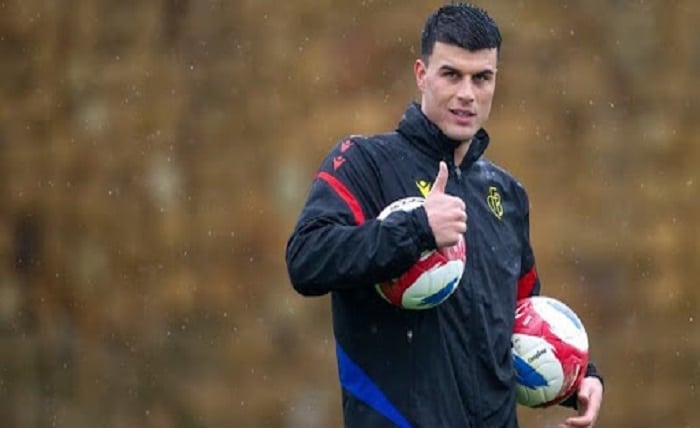
Flavius Daniliuc has experienced an unusually varied football education, moving through elite academies before establishing himself in professional European competitions. His career includes development in Spain and Germany, senior appearances in France and Italy, and a return to competitive football in Switzerland, watch football results (kết quả bóng đá) now!
Flavius Daniliuc Background and Essential Professional Career Details
Born in Vienna on April 27, 2001, Flavius Daniliuc represents Austria and plays primarily as a central defender. He stands approximately 1.88 meters tall, according to several professional profiles, and generally uses his right foot when distributing possession.
His physical attributes help him compete in aerial situations, while his experience across multiple leagues supports tactical adaptability. He has also featured in defensive roles requiring movement toward wider areas, particularly when opponents attack behind advancing fullbacks.
| Category | Information |
| Date of birth | April 27, 2001 |
| Birthplace | Vienna, Austria |
| Nationality | Austrian |
| Height | Approximately 1.88 meters |
| Preferred foot | Right |
| Primary position | Central defender |
| Additional role | Right-sided defender |
| Current club | FC Basel |
| Joined Basel | September 2025 |
| Previous senior clubs | Nice, Salernitana, Salzburg, Hellas Verona |
| International experience | Austria senior national team |
| Major international tournament | European Championship 2024 |
His development began in Austria before youth opportunities introduced him to two major European football institutions at an early age. A period within Real Madrid’s academy was followed by several years at Bayern Munich, where positional discipline received considerable attention.
Unlike players who remain inside familiar systems, he subsequently faced different tactical expectations almost every time he changed clubs. His senior career began gaining momentum at Nice, where French league football demanded more consistent concentration against experienced attacking players.
Moving to Italy introduced further tactical challenges, especially when defending compact spaces and maintaining coordination within structured defensive units. Basel later provided an opportunity to rebuild continuity after several temporary moves and changes in professional environments.
Career Milestones That Influenced His Development as a Defender
The career of Flavius Daniliuc illustrates how different football cultures can sharpen separate aspects of a defender’s game. Three stages explain how his early education developed into professional experience and a more stable role in Switzerland.
Elite Youth Academies Built Strong Foundations for Defensive Discipline
- His early football education began in Austria, where youth training introduced positioning, controlled passing, and basic defensive responsibilities during matches.
- Moving into Real Madrid’s development system exposed him to technical expectations that demanded confident possession under opposition pressure.
- At Bayern Munich, he encountered a structured approach requiring defenders to maintain organized distances and support controlled attacking buildup.
- Flavius Daniliuc developed experience reading movements ahead of him, particularly when opposing forwards attempted runs behind the defensive line.
- Competing against talented academy players also emphasized concentration, because individual mistakes could immediately expose teammates to dangerous attacking situations.
- These formative years provided valuable preparation, although professional football would later introduce greater physical pressure and less time for decisions.
Professional Football in France and Italy Tested His Defensive Judgment
- Nice introduced him to senior competition in 2020, requiring stronger positional awareness against experienced attackers operating across different attacking systems.
- His French league appearances offered opportunities to improve defensive timing, especially when forwards attempted to exploit gaps between teammates.
- A move to Salernitana in 2022 brought additional experience in Italian football, where coordinated marking frequently determines defensive effectiveness.
- Flavius Daniliuc needed to judge when to challenge opponents directly and when maintaining the defensive line offered greater protection.
- During his first Italian league campaign, he made 27 appearances, demonstrating growing involvement despite the competition’s demanding tactical environment.
- The experience revealed that successful defending requires collective organization, particularly against teams capable of switching attacking positions quickly.
Temporary Moves and Basel Provided Opportunities for Greater Consistency
- A temporary return to Austria with Salzburg in early 2024 offered opportunities to experience aggressive pressing from a different perspective.
- Later that year, a loan to Hellas Verona brought him back into Italian competition and another demanding defensive environment.
- These moves expanded his tactical experience, although repeated transitions also interrupted the continuity required to develop stable defensive partnerships.
- Flavius Daniliuc joined Basel in September 2025, entering a league where defenders must respond to varied attacking approaches.
- During the 2025 to 2026 Swiss league campaign, he made 27 appearances and scored twice, reflecting meaningful involvement.
- Regular starting opportunities in the following season suggested growing trust, making consistency a central measure of his development at Basel.
Tactical Analysis of His Defensive Strengths and Remaining Challenges
Evaluating Flavius Daniliuc requires attention to defensive decisions that often happen before a tackle or interception becomes necessary. His effectiveness depends on positioning, communication, aerial challenges, and the speed of his decisions when opponents attempt to create space.
Positioning Between Opponents Helps Prevent Dangerous Attacking Runs
- A central defender must constantly adjust his position according to the ball carrier, nearby attackers, and teammates protecting surrounding areas.
- When opponents attempt diagonal runs, maintaining appropriate distances can prevent straightforward passes into the space behind the defensive line.
- Flavius Daniliuc benefits from reading those movements early, because timely positioning reduces the need for difficult recovery challenges.
- If a midfielder loses possession unexpectedly, the defender must quickly assess whether stepping forward would expose valuable space behind him.
- In compact defensive structures, communication with fullbacks becomes essential when opposing wingers move into central areas during attacking combinations.
- His positioning becomes more effective when teammates maintain coordinated distances, allowing defensive pressure without creating avoidable gaps between players.
Physical Presence and Aerial Challenges Strengthen Defensive Control
- His height provides an advantage when contesting high deliveries, particularly against forwards attempting to receive crosses near the penalty spot.
- Successful aerial defending still depends on timing, because jumping too early can allow an opponent to attack the descending ball.
- Flavius Daniliuc can use his physical presence to challenge attackers without abandoning the defensive position required to protect teammates.
- During shoulder-to-shoulder contests, maintaining balance helps defenders stay involved after initial contact rather than conceding unnecessary dangerous spaces.
- Set-piece defending requires careful attention to assigned opponents, especially when attacking teams employ coordinated blocking movements inside crowded areas.
- Improving consistency in aerial duels would further strengthen his value when Basel faces opponents relying heavily on direct deliveries.
Passing Decisions Under Pressure Influence the Entire Defensive Structure
- Modern defenders frequently begin attacking sequences, making their first passing decisions important whenever opponents apply pressure near the penalty area.
- A short pass toward midfield can advance possession, but only when the receiving player has enough space to turn safely.
- Flavius Daniliuc possesses experience in possession-oriented academies, which can support controlled distribution when suitable passing options remain available.
- Against coordinated pressing, however, forcing passes through crowded central areas may expose teammates to immediate chances after turnovers.
- Longer deliveries become useful when opponents advance aggressively, particularly if attacking teammates position themselves behind the opposing midfield line.
- Greater reliability in selecting passing distances can help his team retain possession while avoiding unnecessary risks during defensive buildup.
Conclusion
The strongest argument for Flavius Daniliuc lies in his breadth of experience and increasing opportunity to establish defensive consistency. His development across major academies and several professional leagues has exposed him to contrasting demands on positioning. Basel provides a setting where those experiences can support regular performances and stronger defensive partnerships, play Corner Kicks Betting (Kèo Phạt Góc) now!